High-Touch Disinfection Planning for Shared Workplaces

Key takeaway: Effective disinfection in shared workplaces targets high-touch surfaces on a defined frequency instead of blanketing every surface. Identify the touch points, match an EPA-registered disinfectant to each surface, follow the label contact time, and document the routine so it can be reviewed.
The Case for Targeted Disinfection
Shared workplaces — coworking spaces, multi-tenant offices, corporate campuses with hotdesking, and any facility where multiple people use the same surfaces throughout the day — face a specific hygiene challenge. High-touch surfaces accumulate microbial contamination rapidly, and in shared environments, the rate of contact is amplified by the number of users.
Blanket disinfection of every surface in a facility is neither practical nor necessary. Effective disinfection planning focuses resources on the surfaces that matter most: the high-touch points where pathogen transfer is most likely to occur. A targeted approach delivers better outcomes at a sustainable cost.
Identifying High-Touch Surfaces
High-touch surfaces are any surfaces that are contacted frequently by multiple people throughout the day. In a shared workplace, the most critical high-touch points include:
Building entry and circulation:
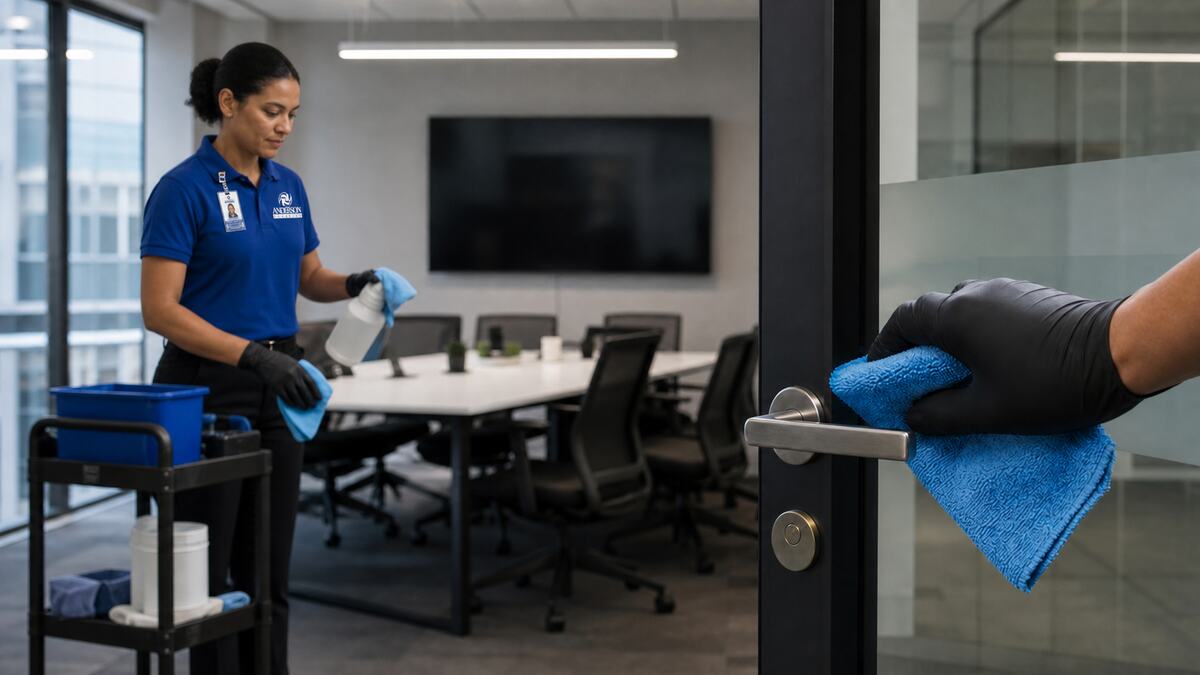
- Exterior and interior door handles and push plates
- Elevator call buttons and cabin buttons
- Stairwell handrails and door hardware
- Reception desk surfaces and sign-in devices
- Security badge readers and turnstile contact points
Shared work areas:
- Shared desks, keyboards, and mice in hotdesking environments
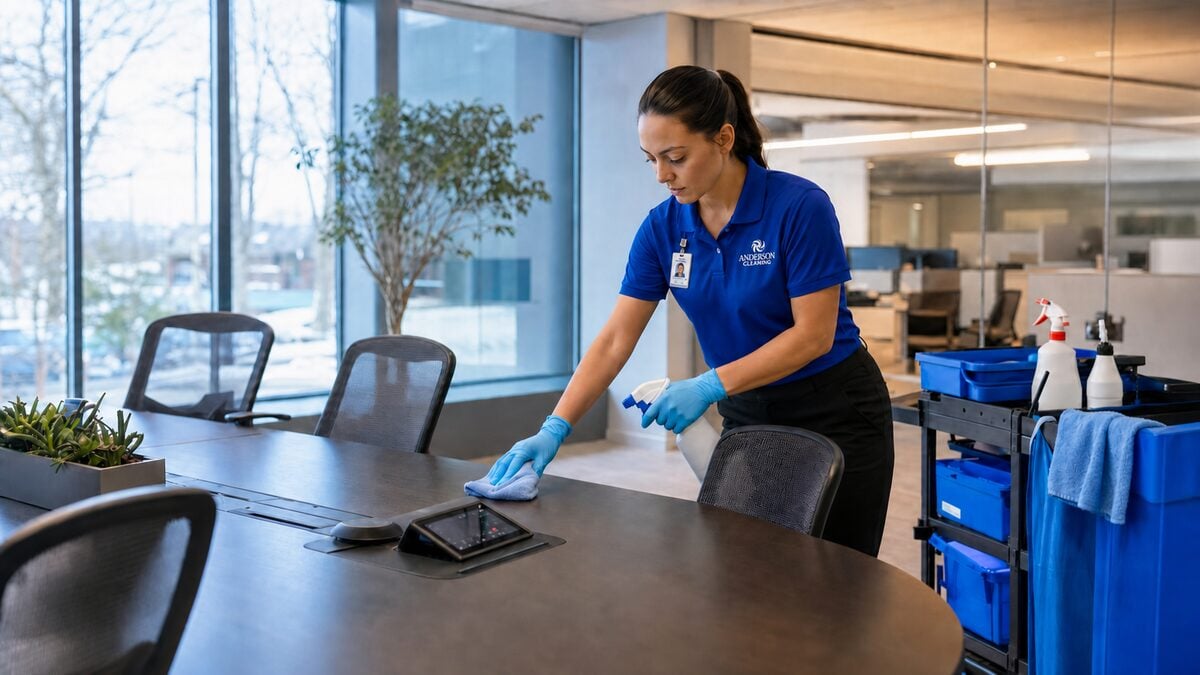
- Conference room tables, chairs (armrests), and A/V remote controls
- Shared printers, copiers, and scanner touch screens
- Phone handsets in shared offices or conference rooms
Breakroom and kitchen:
- Refrigerator and microwave handles
- Coffee machine buttons and handles
- Sink faucet handles
- Vending machine buttons
- Shared condiment containers and utensil holders
Restrooms:
- Stall locks and door handles
- Faucet handles (in non-automatic installations)
- Soap and towel dispenser levers
- Light switches
Mapping these surfaces during a facility walkthrough is the first step in building a disinfection plan. The map should document each high-touch point, its location, and the estimated frequency of contact.
Understanding Dwell Time Requirements
Disinfection is not instantaneous. Every EPA-registered disinfectant has a specified dwell time — the amount of time the product must remain wet on the surface to achieve its stated kill claims. Dwell times vary by product and can range from 30 seconds to 10 minutes.
This is one of the most commonly misunderstood aspects of disinfection. Spraying a surface and immediately wiping it dry does not disinfect. The product must remain in wet contact with the surface for the full dwell time to be effective.
When selecting disinfection products for a shared workplace, shorter dwell times are generally preferable because they reduce the time surfaces are wet and unavailable for use. Products with one- to two-minute dwell times offer a practical balance between efficacy and operational convenience.
Cleaning staff should be trained on the specific dwell time requirements of the products they use, and supervisors should verify compliance during quality inspections.
Selecting EPA-Registered Products
All disinfectants used in commercial facilities should be EPA-registered. The EPA registration number, printed on the product label, confirms that the product has been tested and verified to kill the specific pathogens listed on its label.
When evaluating disinfection products for shared workplaces, consider:
- Kill claims: Does the product cover the pathogens of concern? For general workplace disinfection, products should be effective against common bacteria (Staphylococcus aureus, E. coli) and viruses (influenza, norovirus, SARS-CoV-2).
- Surface compatibility: Some disinfectants can damage certain materials. Verify that the product is safe for use on the surfaces in the facility, including electronics, laminate, stainless steel, and upholstery.
- Dwell time: Shorter is better for operational practicality.
- Toxicity and odor: In occupied shared workplaces, products with strong chemical odors or high toxicity can cause complaints or health concerns. Quaternary ammonium (quat) based products are widely used in commercial settings because they offer effective disinfection with relatively low odor and toxicity.
Frequency Planning by Traffic Volume
Disinfection frequency should be proportional to surface contact frequency. Not every high-touch surface needs the same treatment cadence.
High-frequency surfaces (multiple times per day):
- Elevator buttons, door handles at main entrances, restroom fixtures, and shared kitchen appliances in high-traffic buildings should be disinfected two to four times per day during occupied hours.
Moderate-frequency surfaces (once or twice daily):
- Conference room tables and A/V equipment, shared printer touch screens, and secondary entrance door handles can be disinfected once in the morning and once in the afternoon.
Standard-frequency surfaces (nightly):
- Individual workstation surfaces in assigned-seating environments, office light switches, and interior stairwell handrails can be addressed during nightly janitorial cleaning.
Event-driven disinfection:
- Conference rooms should be wiped down between meetings. Shared desks in hotdesking environments should be cleaned at the end of each user session if possible, or at minimum once daily.
A disinfection frequency matrix — documenting each surface, its contact level, and its cleaning cadence — provides a clear reference for cleaning staff and a basis for quality verification.
Documentation for Tenant Communication
In multi-tenant shared workplaces, tenants and occupants want to know that disinfection is happening. Documentation serves both operational and communication purposes.
Effective documentation practices include:
- Disinfection logs posted in common areas (similar to restroom inspection logs) showing date, time, and initials of the person who performed the disinfection
- Monthly summary reports shared with building management or tenant liaisons, documenting disinfection frequency, products used, and any issues encountered
- Product safety data sheets (SDS) available on request for tenants who want to verify that the products used are safe for their employees
Transparency builds trust. Tenants who can see that disinfection is happening consistently are less likely to raise concerns and more likely to view the facility as well-managed.
Balancing Disinfection with Green Cleaning Goals
Many facilities have adopted green cleaning programs that prioritize environmentally preferable products and practices. Disinfection — which by nature involves antimicrobial chemicals — can create tension with green cleaning objectives.
The key is proportionality. Green cleaning programs do not prohibit disinfection; they advocate for using disinfectants only where and when they are genuinely needed, rather than applying them universally. A targeted high-touch disinfection program is inherently aligned with green cleaning principles because it concentrates chemical use on the surfaces that present the highest risk, rather than saturating every surface in the building.
Additional strategies for balancing disinfection and sustainability include:
- Using hydrogen peroxide-based disinfectants, which break down into water and oxygen
- Selecting products certified by Green Seal or UL ECOLOGO where effective options exist
- Cleaning surfaces first with a green-certified general-purpose cleaner, then applying disinfectant only to verified high-touch points
- Training staff to use appropriate product quantities rather than over-applying
Anderson Cleaning's disinfection programs are designed to deliver effective pathogen control while minimizing unnecessary chemical use. The approach starts with a high-touch surface audit, defines frequency based on actual traffic patterns, and documents every step for quality verification and tenant communication.
A sustainable disinfection plan is not about doing more — it is about doing the right things, in the right places, at the right frequency.
Sources
Need Professional Cleaning Services?
We handle critical cleaning for offices, healthcare facilities, and life sciences environments across Western MA and Northern CT. Get a custom proposal built for your facility.
Request Proposal