Winter Floor Care: Preventing Salt and Chemical Damage

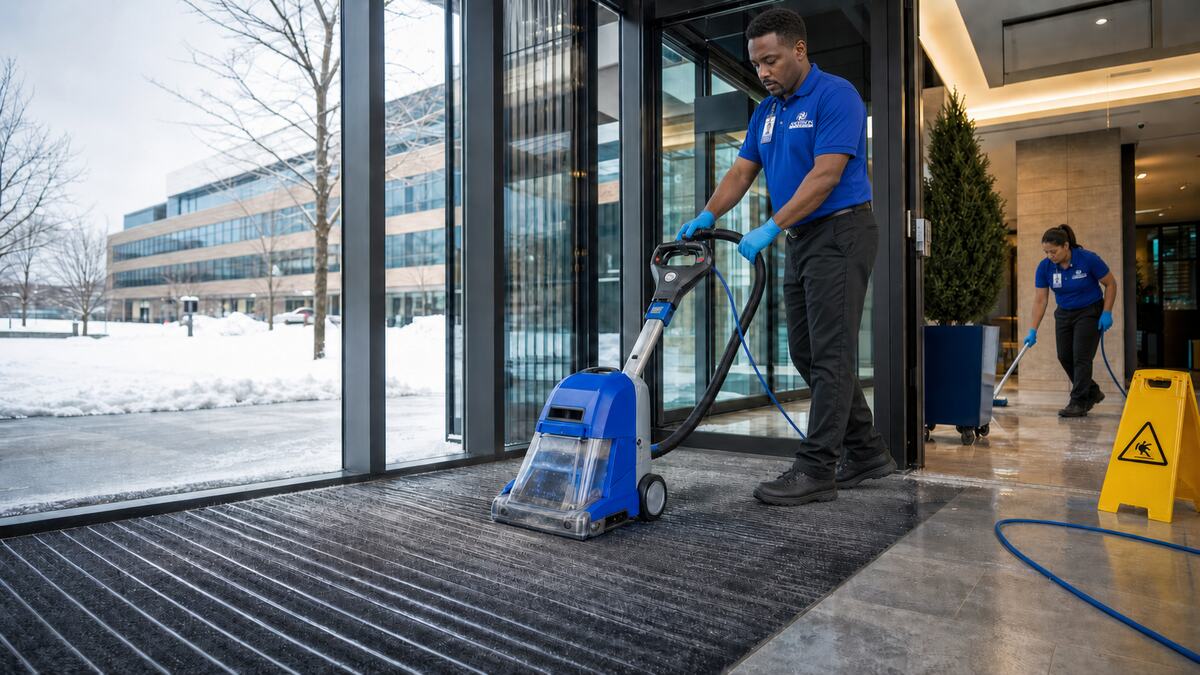
Key takeaway: Salt, sand, and ice-melt residue attack floor finishes and adhesives all winter. The defense is entry matting, daily neutral cleaning, more frequent machine scrubbing in entry zones, and a spring restoration plan. The damage is cumulative, so the routine matters more than any single cleanup.
The Hidden Cost of Winter on Commercial Floors
Every winter, facility managers face the same quiet threat: road salt, sand, and ice melt chemicals tracked indoors by foot traffic. These substances do not just make floors look dirty. They chemically attack floor finishes, degrade adhesives, and etch into porous surfaces. Left unmanaged, a single winter season can cause more flooring damage than a full year of normal wear.
Understanding the specific risks and building a proactive defense plan is essential for any facility that wants to protect its flooring investment. The damage is cumulative, and by the time discoloration or finish failure becomes visible, the underlying harm has already progressed.
How Salt and Ice Melt Chemicals Damage Flooring
Different flooring materials respond to winter contaminants in different ways, but none are immune.
VCT (Vinyl Composition Tile) is particularly vulnerable. Salt crystals embed in the wax finish and create micro-abrasions as foot traffic grinds them into the surface. Over time, finish layers erode unevenly, leaving a hazy, discolored appearance that no amount of buffing can correct. The only remedy at that point is a full strip and refinish.
LVT (Luxury Vinyl Tile) handles moisture better than VCT, but calcium chloride and magnesium chloride — common ice melt ingredients — can leave a white residue that bonds to the surface. If not neutralized promptly, this residue dulls the factory finish and can cause permanent hazing.
Terrazzo floors are susceptible to salt crystallization within the pores of the material. When salt-laden moisture enters micro-pores and then evaporates, salt crystals expand inside the stone. This process, called subflorescence, can cause spalling and pitting over months.
Sealed concrete floors in lobbies and parking structures face similar challenges. Salt accelerates the breakdown of topical sealers, and freeze-thaw cycles can cause surface scaling if moisture penetrates compromised seal coats.
The Three-Mat Entrance System
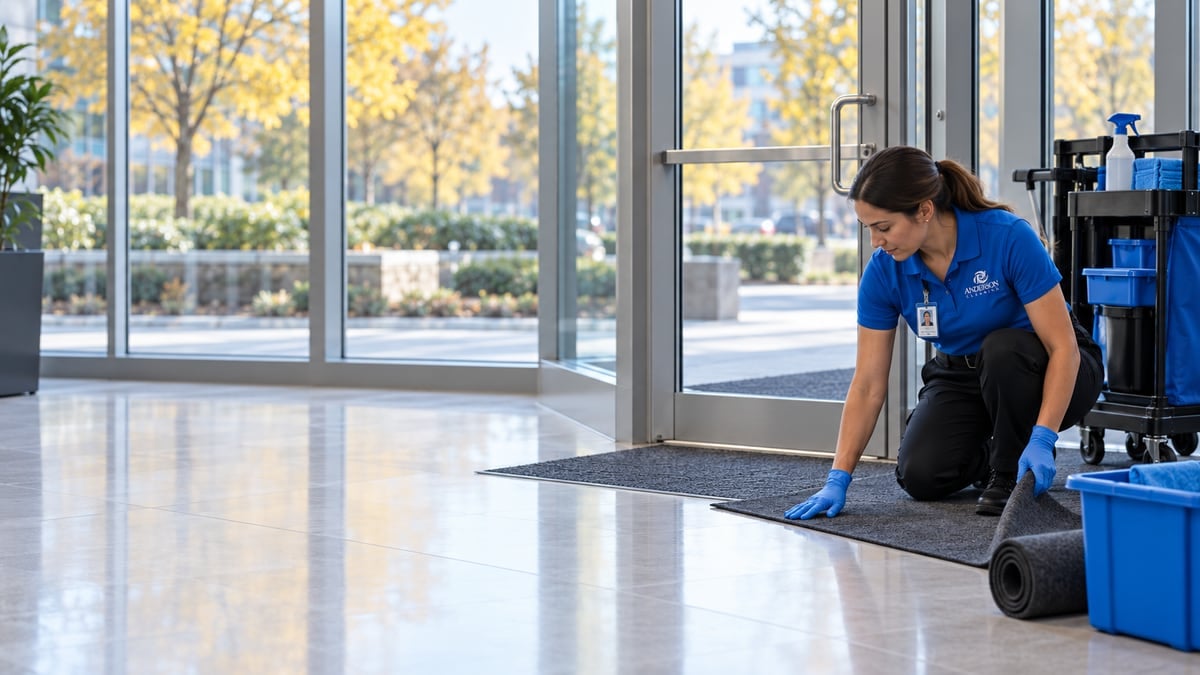
The single most effective defense against winter floor damage is a properly designed entrance matting system. A three-mat configuration captures the majority of contaminants before they reach finished flooring.
- Zone 1 — Exterior scraper mat: A coarse, open-weave mat placed outside the door captures large debris, gravel, and heavy salt deposits from shoe soles. This mat should be at least four feet deep.
- Zone 2 — Transition mat: Immediately inside the door, a medium-pile mat with moisture-absorbing properties traps finer particles and begins wicking moisture from footwear. This zone should extend six to eight feet.
- Zone 3 — Interior wiper mat: A low-profile, fine-fiber mat captures the remaining fine grit and moisture. This final zone should extend another six to eight feet into the building.
Combined, the three zones create a 15- to 20-foot capture path. Studies from the ISSA (International Sanitary Supply Association) suggest that properly maintained entrance matting can capture up to 80 percent of tracked-in contaminants.
The key word is "maintained." Saturated mats become counterproductive — they deposit moisture and debris rather than capturing it. During heavy winter storms, mats may need to be swapped or extracted multiple times per day.
Daily Neutralizer Mopping
Even with an effective matting system, some salt and chemical residue will reach interior floors. Daily neutralizer mopping is the second critical layer of defense.
Standard mopping with water alone is not sufficient. Salt residue requires a neutralizing agent — typically a mildly acidic cleaner formulated to dissolve alkaline salt deposits without damaging floor finishes. The goal is to break the chemical bond between the residue and the floor surface before it can cure and harden.
Key practices for daily winter mopping include:
- Use a dedicated ice melt neutralizer product, not a general-purpose cleaner
- Mop high-traffic corridors and lobby areas at least twice daily during active winter weather
- Change mop water frequently — dirty mop water redistributes contaminants rather than removing them
- Pay special attention to elevator vestibules, reception areas, and transition zones between carpeted and hard-surface areas
Scrub-and-Recoat Scheduling
Routine scrub-and-recoat cycles become more important during winter months. A scrub-and-recoat removes the top layer of finish (along with embedded contaminants) and applies a fresh protective coat. This is less invasive and less expensive than a full strip and refinish, but it restores the protective barrier that salt and chemicals degrade.
For facilities with moderate to heavy winter foot traffic, scheduling a mid-winter scrub-and-recoat in January or February can prevent finish failure and extend the interval between full strip-and-refinish cycles. Facilities in regions with prolonged winters — including Western Massachusetts and Northern Connecticut — often benefit from this mid-season intervention.
Anderson Cleaning's floor care programs include seasonal scrub-and-recoat scheduling as part of the overall floor maintenance calendar. This proactive approach prevents the kind of finish deterioration that leads to expensive emergency restoration work in spring.
Planning for Spring Restoration
Even with the best winter prevention program, some level of cumulative wear is inevitable. Building a spring restoration into the annual facility budget ensures that floors start each new season in optimal condition.
Spring restoration typically includes:
- A full strip and refinish of VCT floors that have sustained visible finish degradation
- Deep cleaning and re-sealing of terrazzo and concrete surfaces
- Professional extraction and treatment of entrance matting
- Assessment of mat condition and replacement of worn units
Budgeting for spring restoration as a planned expense — rather than an emergency repair — allows facility managers to maintain consistent floor appearance year-round and avoid the higher costs associated with reactive maintenance.
Building a Winter Floor Care Plan
The most effective winter floor care programs combine all four layers: entrance matting, daily neutralizer mopping, mid-season scrub-and-recoat, and planned spring restoration. Each layer reduces the load on the next, and together they provide comprehensive protection.
Anderson Cleaning works with facility managers to build customized seasonal floor care plans that account for building traffic patterns, flooring types, and regional weather conditions. A structured plan prevents the kind of cumulative damage that shortens floor life and increases long-term replacement costs.
Protecting commercial flooring through winter is not about reacting to damage after it occurs. It is about building a system that prevents damage from accumulating in the first place.
Sources
Need Professional Cleaning Services?
We handle critical cleaning for offices, healthcare facilities, and life sciences environments across Western MA and Northern CT. Get a custom proposal built for your facility.
Request Proposal