What a Quality Review Walk-Through Covers and How to Prepare

Key takeaway: A quality review walk-through is a scheduled visit where the site supervisor and the facility manager walk the building together, compare each area against the written scope, and record findings with a named owner and a date. Prepare by listing what you have noticed since the last review, bringing the current scope, and reserving the time to walk the areas in scope.
What is a quality review walk-through?
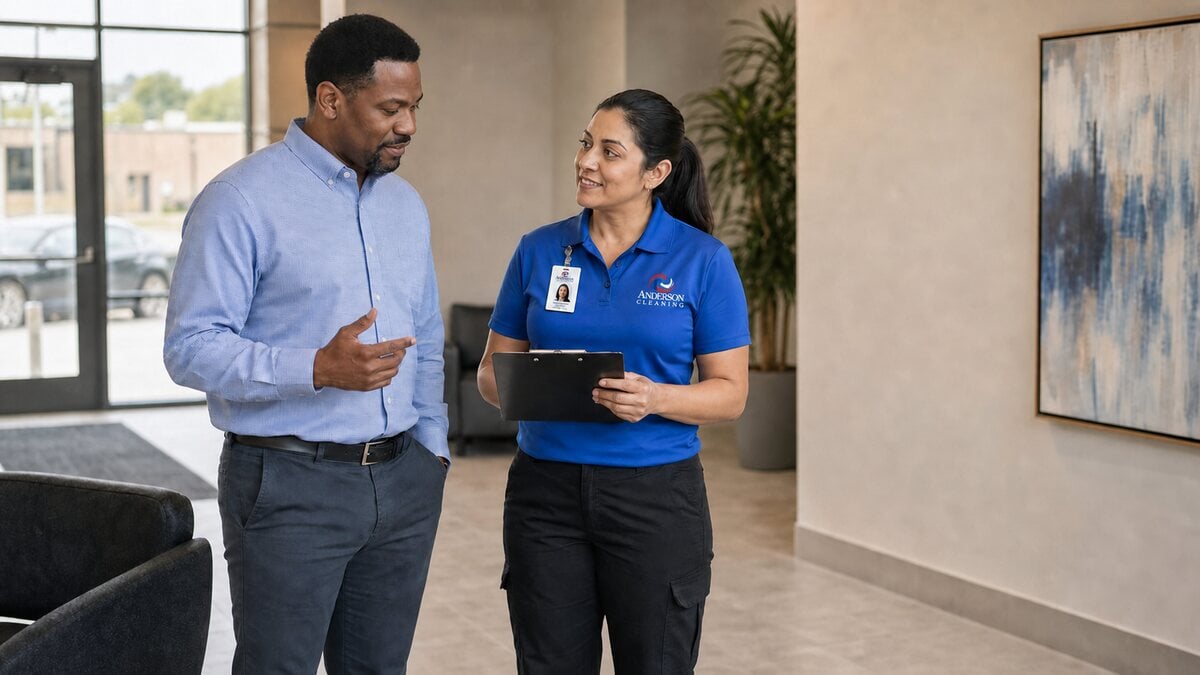
A quality review walk-through is a scheduled visit in which the dedicated site supervisor and the facility manager, practice administrator, or office manager walk the areas in scope together on a fixed route, compare them against the written cleaning specification, and record what will change. It happens on the schedule agreed in the service plan, not when something has gone wrong.
A complaint call is reactive and usually about one thing. A quality review is the set time when the whole program is looked at: the areas, the tasks, the cadence, the products, and the way issues are raised and closed. It is also where the cleaning specification gets updated, because a scope that never changes is a scope nobody is reading.
Who attends a quality review?
Two people are needed: the site supervisor and the person on your side who owns the cleaning program. The supervisor attends because they are accountable for the site and can speak to what the crew did and why. Your representative attends because findings need an owner who can approve a change in scope or in building access.
Others join when the agenda calls for it: a clinical lead for a review of exam-room protocols, a tenant contact when a complaint came from that suite, or the vendor's account contact, the step above the supervisor on the escalation path, when a finding has stayed open across more than one review or the scope itself is being renegotiated. Keep the group small enough to walk the route and finish.
What is on the agenda of a quality review?
The agenda has five parts, in a deliberate order.
- Open items from the last review. Each action recorded last time is read out and marked closed, still open, or no longer needed. Nothing new is discussed until this is done.
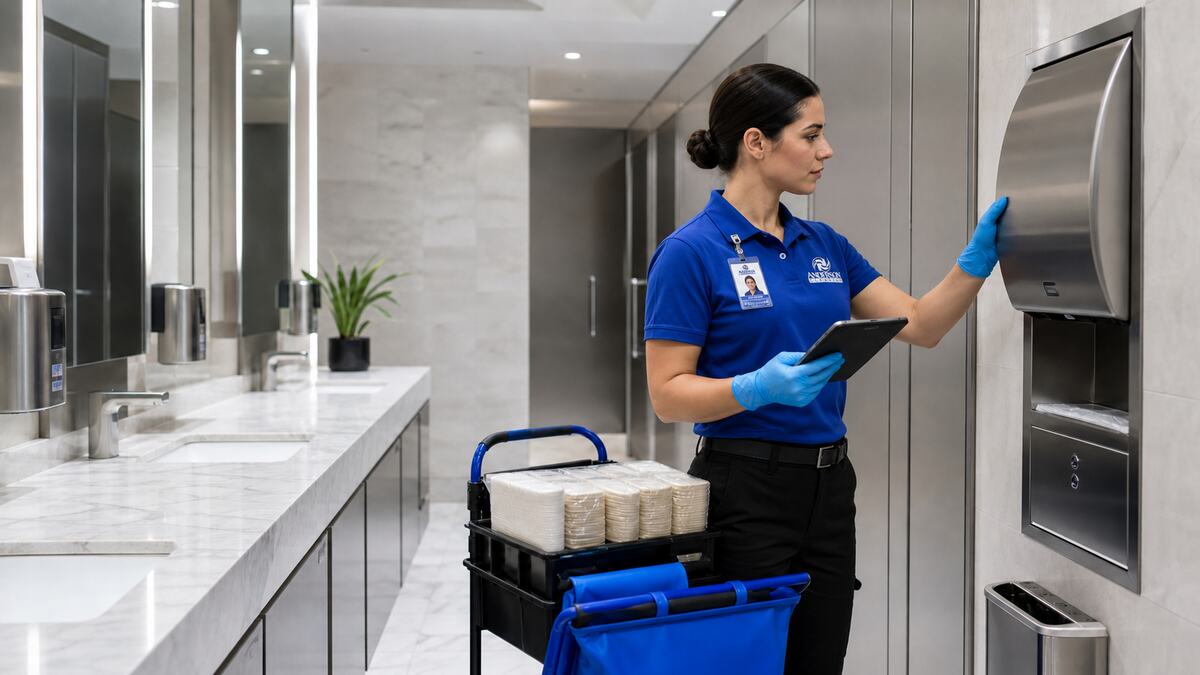
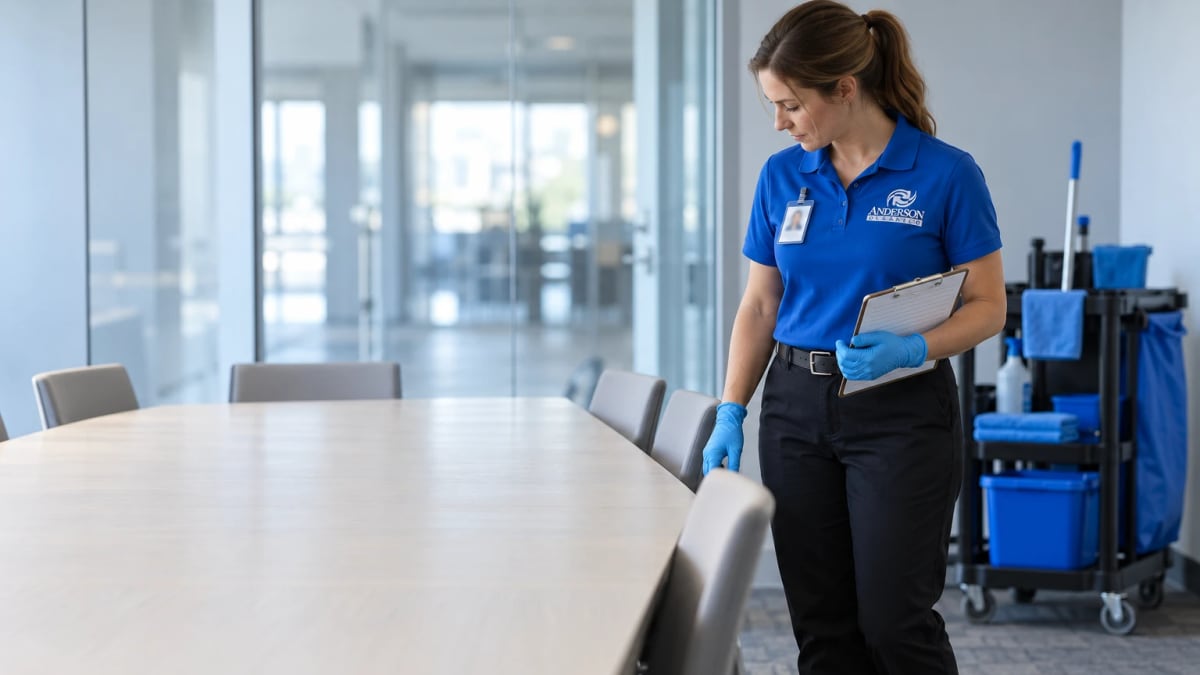
- The walk. The pair follows a fixed route. In a small facility it covers every area in scope; in a larger building it rotates so every area is walked over the review cycle, and any area with an open finding or a recent complaint is on every route. In each area they check the tasks listed for it at the cadence listed, look at the surfaces where wear or missed work shows first, and note anything the crew has reported.
- The records. The inspection log entries since the last review are compared against the walk. A gap in the log, or a finding the log did not catch, is a finding in itself.
- Changes. Anything the building needs that the scope does not cover: a new suite, changed hours, a surface that needs a different product, a task that should move to a different cadence.
- The next review. Date, attendees, and any area that needs a longer look next time.
A review that skips the first item turns into a tour.
What does the site supervisor bring?
The supervisor brings the current written scope with its version date, the inspection log for the period since the last review, the record of the last review, with its action list and the areas it walked, and the product list for the facility. In a medical office the product list carries the EPA registration number of each disinfectant in use. The records a practice should keep are the same documents, so the review is the easiest time to confirm they are complete.
The supervisor also brings what the paperwork does not hold: which crew member covers which area, how backup coverage works when someone is out, and what the crew has noticed about the building. A leak under a sink, a door that sticks, a dispenser that empties faster than its stocking level assumed, all come through the site supervisor, and the review is where they are written down with the facility manager present.
How are findings recorded and closed?
Each finding is written down with four things: the area, what was observed, the action agreed, and the person responsible, with a date if the action is not immediate. The supervisor signs the record and the facility contact initials or confirms it. The owner is not always the vendor: a storage closet too full to stage supplies may belong to the facility, and a floor finish wearing through may lead to a scrub-and-recoat that both sides approve and schedule.
Closing a finding means the next review confirms it, not that someone said it was done. A missed task is closed when the supervisor's log shows it completed on the following visits and the walk confirms it. A scope change is closed when the written specification carries the new version date and the crew is working from it. A finding that is still open at the following review moves up the escalation path, from the supervisor to the account contact, so that a stuck item does not stay stuck.
How should a facility manager prepare?
Preparation takes little time. Do four things.
- Keep a running list. Between reviews, note what you or your staff noticed, with the date and the area. Bring the list rather than trying to remember.
- Bring the current scope. If you cannot find it, that is the first finding. Ask the supervisor for the version in use and compare it with the one you signed.
- Check your own actions. Any item from the last review assigned to the facility, such as clearing a storage area, changing an access schedule, or approving a product, should be done or have a reason it is not.
- Reserve the time. A walk-through of the areas on the route cannot be done in a corridor conversation. Block the calendar, and bring whoever can approve a change on the spot.
If the building has changed since the last review, say so at the start: a new tenant, a clinic that extended its hours, a renovation about to begin. The scope should change with it.
How often should quality reviews happen?
Quality reviews happen on the schedule agreed in the service plan, set during onboarding and adjustable at any review. The schedule is set from the facility: how many areas are in scope, whether records are kept for surveys, and how often the building changes, and it can be shortened or lengthened at any review as those change. Whatever the interval, it is written down, each review is held, and each one leaves a record.
Anderson Cleaning assigns a dedicated site supervisor to every account and holds quality reviews on an agreed schedule, with findings recorded and the scope updated to match. A sample Quality Review Template shows the layout before your first review. Schedule a walk-through and we will write the review schedule into the proposal.
Sources
Need Professional Cleaning Services?
We handle critical cleaning for offices, healthcare facilities, and life sciences environments across Western MA and Northern CT. Get a custom proposal built for your facility.
Request Proposal